The Birth of “the Tuck”

Skinny Jeans and Boots

While I was trying to track down the reference to Millennial women being unable to zip up their boots due to overly-developed calf muscles for the previous post, I stumbled on another interesting article in the New York Observer, this one from January of 2005.

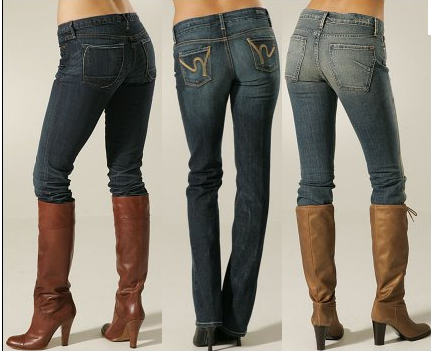
Nowadays, the jeans-tucked-into-tall-boots look is so commonplace, it’s hard to remember that its only been around in its current incarnation for 10 years. The Observer piece, by Anna Schneider Mayerson, takes us back to a time when this was a relative novelty.

“In Manhattan these days, it’s hard to find a girl who isn’t doing the Tuck. Across West Chelsea bars, sleek boutiques in Madison Avenue and grungy boîtes of the Lower East Side, the women of the city can be found peg-legging their jeans and parading around with them scrunched into the legs of their boots like crumpled bed sheets. They’re pulling sculpted stiletto boots up over trousers and walking around with them in plain view, like a pair of knee socks. Or they’re rolling their jeans up so that they rest just where the boot ends, thus shortening the appearance of their legs by about 40 percent. And somehow they seem to think this is a good idea.”

Note that little zinger at the end, because for all the enthusiasm of the women interviewed, there was not universal approbation for “the Tuck.” Ms. Mayerson describes it as a “frumpy-mom look that was last hot in 1982, the year of Flashdance and Gloria Vanderbilt perfume” and marshals a chorus of male disapproval:

“they do the jeans inside of their big white boots and try to do the ‘hipster rock slut’ look, but it’s also like, ‘I just moved here from Des Moines,’”

“People wore it in the 70’s. It probably looked O.K. then or it looked good then. Certain trends can come back and they can be reincarnated and look good. That one should have been left in the 70’s”

“It looks kind of medieval. It reminds me of Robin Hood and his friends, more like a costume than a stylish outfit. I don’t think it’s particularly flattering or subtle.”

“It makes the legs look stubbier. I think it’s just so much less flattering. It’s a little frame for the middle part of the body. It makes everyone look a little rounder.”

Which shows what guys know, because “the Tuck” is still going strong a decade later. The article touches on some possible reasons, the most convincing of which was the emergence of new styles of boots, less tight fitting and with heavy heels, that couldn’t be worn under pants and which required a different proportionality in outfits. But ultimately it’s just a very practical look that has stood the test of time.

Reference:

Image Source:

A Pause and Review

Caroline-Munro-2

This is probably as good a time as any to pause and review what we’ve covered so far. The last series of posts have covered the birth of the modern fashion boot, charting its rise in popularity from the first years of the 1960s to the beginning of the 1970s. During that time, we’ve seen a change in the nature of boots for women. Initially functional, utilitarian footwear for rainy days, boots transitioned to a more high-profile role, where their dramatic, almost masculine overtones acted in sharp contrast to otherwise conventional feminine fashion.

From there, boots evolved in tandem with other aspects of sixties fashion; the rise – literally – of the miniskirt; the emergence of styles that drew their inspiration from the space race; the development of novel fabrics and materials. As it evolved, the boot became more feminized, using higher heels and a tighter fit to emphasizing features such as shape and length of the leg. Rather than contrasting with female fashions, boots complemented them, becoming incorporated into the overall ‘look’ of an outfit.

By the end of the decade, fashion boots were available in a hitherto undreamt of variety of colors and styles. Some, like the lace-up granny boot, were unashamedly retro. Others, like the skin-tight hip boots of the late sixties, looked like no type of footwear that had ever been seen before. There were boots that resembled stockings, or leggings, or pants, and there were boots that were so minimal that the line between boot and sandal was completely erased.

More than anything, they became popular in a way undreamed of 10 years previously. By the beginning of the 1970s, as we saw in the last post, it was not unusual for women to own two, four, six or even more pairs. In the mid-1950s, shoe manufacturers had laughed at Beth Levine’s little white calf-length boots; by the end of the following decade, they were no longer laughing. They were too busy making money hand-over-fist.

Image Source:

The Fall of the House of Elliott?

IMG_1525

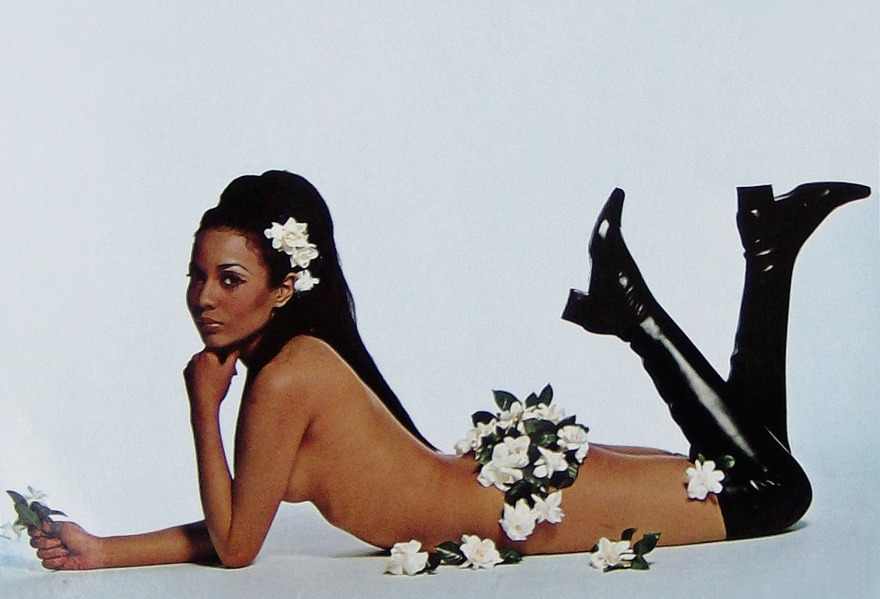
This is one of the more notorious advertising posters of the late 1960s. The style of photography was intended to reflect the nudes of Bill Brandt. It’s one of the earliest examples of co-option of high art imagery to fashion advertising. It was intended to a younger, sexually enfranchised audience.

It was also, unfortunately, one of the first targets of the campaign by women’s rights groups against what they perceived as sexist or exploitative advertising on the London underground. If you saw this, or one of the other ads for this campaign on the tube, like as not it was defaced with the statement “This image degrades women,” or a sticker asking “what are you selling?”

tumblr_n17jxtrEe41tprcs9o1_1280

The answer, of course, is that they were selling boots. In this case, “they” was a British company called T. Elliott and Sons, a traditional firm of shoemakers that became enormously successful in the second half of the 1960s by adapting to the new, youth-centered market for shoes and boots. As Hillary Fawcett writes in a 2013 essay on the rise of accessories in fashion and advertising, Elliotts’ advertising was as critical to their success as their designs.

elliott_alice_boots_paul_christodoulou_67

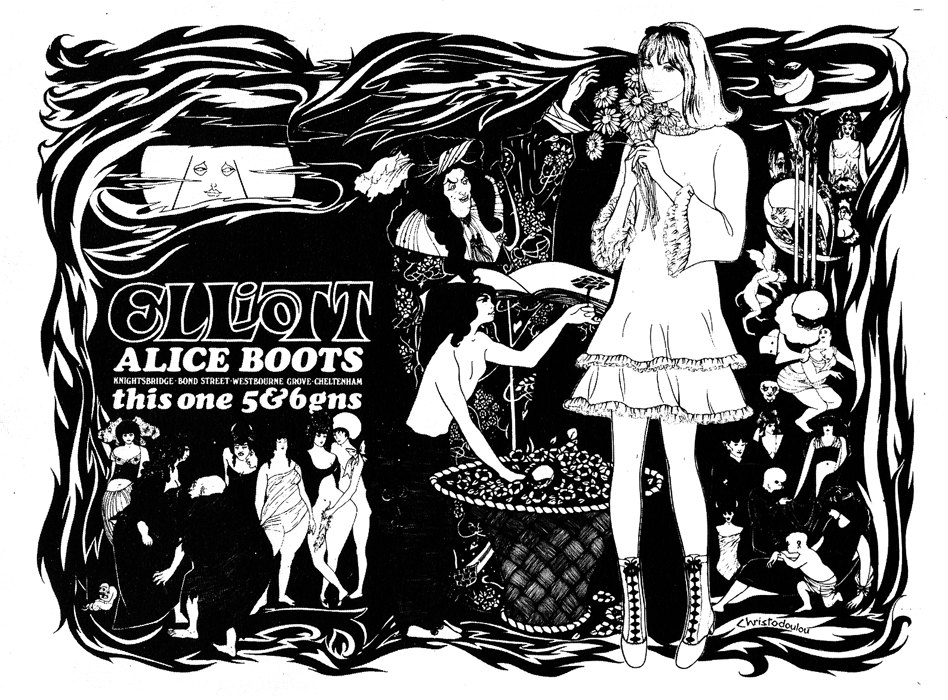
Take for example, this poster, which was intended to advertise Elliott’s “Alice” boot, a Victorian-style throwback that was enormously popular in the late 1960s (see my earlier post on this subject). From its trippy, Aubrey Beardsley-inspired graphics, created by Paul Christodoulou, the Twiggy-like girl-woman waif Alice, and the drug-friendly subtext of Lewis Carroll’s work (“one pill makes you larger, and one pill makes you small,” etc), it was the perfect distillation of the Zeitgeist. The fact that you could buy the poster for 5 shillings and stick it on your wall made it even better.

SWEET JANE BLOG-DOLLY ROCKER (G)

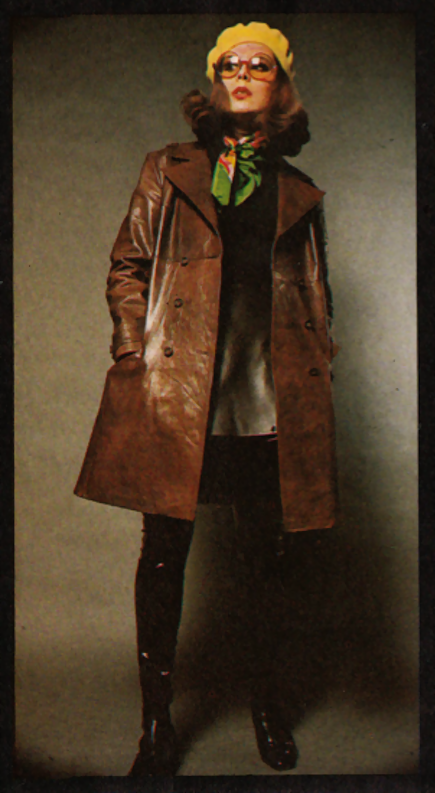
Elliotts’ boots were everywhere in the late sixties and early seventies. They crop up in fashion magazines of all shades. They even turn in in some less salubrious places, such as this 1972 pictorial from the British men’s magazine Mayfair, one of the few times I’ve seen a clothes credit on a centerfold.

MF_Vol7_No9_p37_Chris_Rossiter

Although I grew up in London, I’m not old enough to remember that first generation of Elliott’s adverts. But I do remember that in the late 1970s (probably around 1977/78) there were huge posters for women’s thigh-boots by Elliotts on the concourse of Baker Street station. They must have made quite an impression, because I can still remember them quite clearly and recall that they were shearling-lined ones.

And then – nothing. It seems like Elliotts just dropped off the face of the Earth. Google pulls up a few references to shoes and boots reprinted from contemporary articles in the sixties, but surprisingly little for a company that had such a high profile. So whatever happened to Elliotts? I don’t know.

So there’s the challenge for those of you reading this blog that are interested in boots from this period – can you come up with more information about this company, including more images and ideally images from the 1970s? No prize, just self satisfaction. Hopefully that’ll be enough.

Image Sources:

  • Elliott poster, late 1960s, by Roger Cuthbert (art director Bob Wright): scanned from Skin to Skin (Prudence Glynn, 1982)
  • “Boots by Elliotts, 89s. 11d:”RAVE magazine May 1968 via Sweet Jane
  • Elliott’s advert, 1969: Tumblr
  • Elliott “Alice” boot poster, 1966: thegeneologyofstyle.blogspot.com
  • Chris Rossiter in boots by Elliott: Mayfair, Sept 1972 via Creamcheese

Selected References:

Fawcett, Hilary, 2013. Handbags and glad-rags: the rise and rise of accessories in fashion and advertising. in Wharton, C. (ed). Advertising as Culture. Intellect Books. ISBN 1841506141.

Glynn, Prudence, 1982. Skin to Skin: Eroticism in Clothing. Oxford University Press.

Some Updates

The numbers-based review of the Sixties is taking forever, mostly because I’m juggling other projects. So I figured that I’d highlight some coming attractions, to motivate myself to get a move on as much as anything.

Pinterest_grab

First up, I’ve added another social networked facet to this project, in the form of a set of Pinterest boards. The reason for this is that, at getting on for 11,000 images, the MFW Tumblr Blog was becoming a little unwieldy. I’ll keep using Tumblr as the main repository for project images, but Pinterest allows me to provide a more “curated” set of content, and to offer some things that go beyond the tight 1960s-1980s time-frame.

7c9db103eb9a7f08a09b1671bf9d776b

Next, I’ve been slowly/painfully accumulating a collection of mail order catalogs from the 1970s. These are the big, general catalogs, including Sears and Montgomery Ward from the U.S. and Kays, Freemans, and Janet Frazer from the UK. The reason for this is that I wanted to accumulate some data on what women were actually wearing, as opposed to the picture that you get from magazines like Vogue or L’Officiel. So you can expect this stuff to come through by the end of the year.
il_570xN.529872390_5r5z

If you’ve been following this blog for a while, you may recall that I’ve been building a reference collection of boots to fill some of the gaps in the on-line museum catalogs that served as a data source for the original “Tree of Boots” exercise. I did a couple of posts on this back in April and promised some more updates, which have not been forthcoming. Expect me to rectify this in the next few months.

24987

And finally, I had a plan in my head to do some posts on great boot designers; I did one on David Evins and sketched out a couple of potential pieces on Roger Vivier and Christian Louboutin before I got distracted. Hopefully I’ll be able to get these done as well. Stay tuned.

Image Sources:

Capezio, 1957/1961

63.120.31a-b_CP2

How easy it is to get distracted. I was nicely set on chewing through data from publications to look at fluctuations in the popularity of boots as a fashion item for women between 1960 and the present day. Then, while I was doing some background research for the previous post, I found a reference in a 1961 New York Times article to a boot by Capezio from 1957, described as a “narrow, near knee, flat-footed ballet boot.”

The Times article was saying that this Capezio boot had become one of the popular styles in the 1961 collections, and any reference to a knee-length fashion boot from the 1950s (a time when boots, although present, were invariably ankle length) was worth chasing up. But the more I looked, the more puzzling things became.

For starters, the reference to “ballet boots” (a term that today is usually applied to a form of fetishwear that holds the foot permanently en pointe) is not coincidental. Capezio, as a company, was and is best known as a manufacturer of dance shoes. There is a Canadian shoe store called Capezio, but it only dates back to the late 1970s. Google Capezio and 1960s and you get references to Capezio shoes as a fashion item, but not their relationship to either the dance wear company or the mysterious boots.

Then, lo and behold, I found a pair in the collections of the Met, dating back to 1961. And yes, it looks like these are the ones referenced in the Times article, and it looks like the company is the same as the ballet shoe manufacturer. So at one level, my question is answered.

Except what about those ones from 1957? Were they originally intended for dance wear and subsequently co-opted for fashion, like the famous alligator-skin thigh boots Roger Vivier designed for Saint Laurent’s couture collection in 1963? Or were they an early, Beth Levine-type foray into more aggressively promoting boots as a fashion item?

So now I have to go do more research. Sigh.

Image Source:

  • Metropolitan Museum of Art: Boots, leather, 1961. Brooklyn Museum Costume Collection at The Metropolitan Museum of Art, Gift of the Brooklyn Museum, 2009; Gift of Bonnie Cashin, 1963. Accession Number: 2009.300.7266a, b

Reference:

  • High-Style Boots Rise to the Knee: Fall Versions Will Be an Important Part of Many Costumes. New York Times, May 1961.

Mid 1970s Knee Length Boots

$_57e

As I mentioned in the previous post, I want to draw on my recently created reference collection to do an in-depth consideration of some of the styles of boot that I’ve touched on in earlier posts. For the first of these, I’m looking at the pair that I’ve assigned catalog # 2013.12.002, a pair of black leather boots purchased via eBay.

Mid70-tree

If you’ve been reading this blog for a while, you’ll remember that back when I was reconstructing an evolutionary “tree” for the fashion boot, I identified a small group of related boot styles – a family, if you like – which has its origins at the beginning of the 1970s. This group includes both the iconic suede boots produced by the London store Biba and the platform boots that were popular in the early to middle years of the decades.

PAGE-0232a

Both these styles are well-documented and can be found in the on-line costume collections of major museums. Less well known now, but far more commonplace during this period, was the third style contained within the group, which for want of a better name I’m calling the Mid-70s (or M70) boot. If you look at mail-order catalogs for the middle years of the seventies – say 1974-1977 – this is probably the commonest style of boot.

$_57h

Since I didn’t have “type” specimen for the style in the various collections I’ve been drawing on, I decided I needed to acquire a pair. Fortunately, as ever, eBay came to my aid with this very reasonably priced pair, which were apparently made in Brazil. I don’t have more of a provenance than that, but there are a number of features that very definitely place these boots in that mid-70s period.

$_57hA

The first thing that strikes you when you look at them is how small they are. My wife, who is a petite woman, took one look and declared that there was no way she could get into them, despite their being notionally her size. The ankle is unforgivingly tight and the shaft has been folded and stitched (pleated?) at the top to give them a wicked curve that is only partly relieved by having a very long. elasticated gusset on the inner surface of the shaft. These are absolutely a young woman’s boots and they reflect the comment that I quoted a few posts back from the “Kaschia from Sacha” blog post about having to stretch boots in the back of the store to make them fit.

$_57eA

The next thing you notice is that these are very definitely platform boots, but that the sole is much thinner than the classic platform boot of the period. For the purpose of the tree study, I classed platform boots as having a sole that was greater than an inch in thickness. This seems to hold up.

$_57gA

Another feature of the sole and heel is that they are made from laminated layers of wood, built up to provide both the platform sole and a high, stacked heel. These contrasting wooden accents were another distinctive feature of boots from this period; most boots before and afterwards had soles and heels which were made from the same material as the uppers. Today, wooden heels are more of a novelty, used to give the boots a retro feel.

$_57f

The toe of the boot is rounded – again, this says first half of the seventies. Before and after, boots tended to have more of a pointed toe, as they do today. The round toe was seen in both shoes and boots from early to mid 1970s, and reflects the more “organic” or “rustic” design ethos of the seventies, compared to the “space age” vibe of the sixties and the overt modernism of the eighties. Round-toed boots are quite rare today, even in styles that are consciously retro.

Image sources:

Because I’m idle, I re-purposed the images for these boots on the original sellers page on eBay


On Plastic Boots

e9355e5bd90543c446052e3bc1639ffe

I’m reading (and greatly enjoying) “Women from the Ankle Down,” Rachelle Bergstein’s 2012 history of women’s shoes in the 20th Century. I actually intended to write a piece on Nancy Sinatra, who Bergstein covers in some detail, but I was struck by an observation she made regarding the role of artificial fabrics in promoting the spread of fashion boots in the sixties and thought it was worth sharing here.

As I’ve already noted in a previous post, there were shortages of leather in the mid-sixties, which led to a rise in prices. At the same time, designers like Mary Quant were experimenting with other materials, such as PVC and Corfam, the latter being a shiny artificial leather produced by DuPont. These materials were significantly cheaper than real leather, but also much less durable (you’ll notice if you visit vintage clothing stores that there are very few shoes and boots from this period still around today).

Bergstein proposes that unlike their mothers, who had lived through rationing and postwar austerity, and regarded a good pair of shoes as an investment requiring many years of wear, the young women of the sixties were more open to the idea of disposable fashion; inexpensive, trendy items that could be quickly replaced as and when they went out of fashion.

As Bergstein notes, a knee-length boot crafted out of leather would be significantly more expensive than one made from PVC or Corfam. That would place it beyond the reach of teenagers and young women, and only available to the sort of older, wealthy clientele less likely to take on radical new trends. But instead, the go-go boot became widely adopted by a new breed of young, fashion conscious, independent, and sexually and politically liberal women. So you could say that the cheap, plastic boot opened the way for the widespread acceptance and adoption of boots in the following decade.

If you accept this idea – and it certainly seems convincing – then it forms an intriguing contrast with the fate of the so-called “Russian boot,” the fashion boot of the 1920s and 30s. The Russian boot failed to make a long-term impact because it was too cheap and too egalitarian. Wealthy women were reluctant to adopt the style because of the lack of durability of the materials used and the fact that the boots were affordable footwear for the masses. The same factors that made the go-go boot such a success doomed the Russian boot to failure, because fashion in the twenties was still the preserve of the old and the rich. Something to mull over.

Selected references:

  • Bergstein, Rachelle, 2012. Women from the Ankle Down: The Story of Shoes and How They Define Us. New York, HarperCollins Publishers. ISBN 978-0-06-196968-3

Image source:

  • PVC raincoat and boots by Mary Quant, 1964: Tumblr

The Worst Song in the World

Kinky_Boots_-_Avengers

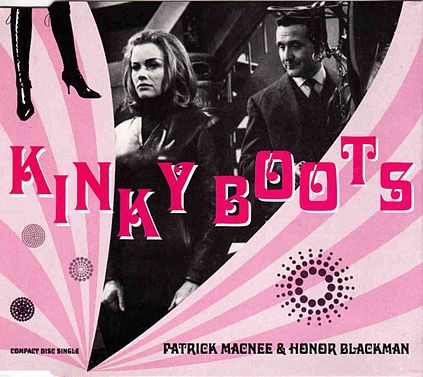
In the history of pop music there have been some truly awful songs. Muskrat Love by The Captain and Tennille, Shaddup You Face by the Joe Dolce Music Theatre, and Don McLean’s American Pie are just three that spring to mind. But you have to go a long way to find a song quite so ghastly as Kinky Boots, a 1964 novelty single by Honor Blackman and Patric Macnee.

CathyGale

Boots was originally written by all-round “wit” Ned Sherrin for the groundbreaking British satirical show That Was The Week That Was (aka TW3). Originally it was just an instrumental piece that was played as backing to a segment on the growing popularity of fashion boots. But then someone had the bright idea of capitalizing on the popularity of the TV show The Avengers by adding lyrics and having the show’s stars sing it.

1599199-cathy_gale

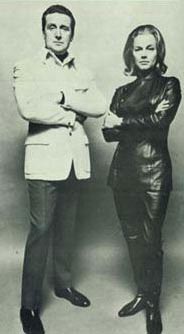
The Avengers had broken new ground in having Blackman abandon the typical damsel in distress model for a female sidekick. Her character, Cathy Gale, was unlike any female character seen on TV before; with a PhD in anthropology, she could also handle a gun and hold her own in a fight with formidable judo skills. Blackman’s leather costumes were originally designed for ease of movement in fight sequences.

the-avengers-in-town

Unsurprisingly, the fashions attracted a lot of attention, particularly the boots that were usually worn with the leather pants, skirts, and jackets. They quickly became one of the signature features of the show, along with Patrick Macnee’s bowler hat and tightly rolled umbrella. In France the show was called Chapeau Melon et Bottes du Cuir, which has an admirable sense of Francophone panache.

Helen Milligan aka Helen Brodie aka Margaret Blair (13)

Back in Britain, of course, the only panache people understood was the acrid fragrance made by Lentheric. Gale’s boots, instead of inspiring admiration for their edgy style and elegance, were the subject of heavy-handed jocular references to “kinky boots.” Oo-er, look at the kinky boots! Naughty! It pains me to admit it, but my fellow countrymen are so terrified of anything even tangentially sexual that they find it easier to make a joke out of it. Benny Hill based an entire career on this.

SS4122

If you want to see a prime example of this, you need look no further than a British mens’ magazine of the 1960s called Spick & Span. It’s not, strictly speaking, pornographic – bare breasts begin to pop up (or out) in the last issues before the magazine folded in the early 1970s. But it does say a lot about what the average British person of that era thought of as titillating (although it’s been gone for a good forty years S&S is still hugely popular with Brits of a certain age – its thread on Vintage Erotica Forums runs to more than 500 pages).

IMG_5135

Spick & Span features statuesque women in poses designed to reveal their underwear, which is mostly of the stockings and suspenders sort (or “sussies” as the average reader of S&S probably referred to them). There were boots as well; short, calf-length ones in the early sixties, tight white vinyl ones in the late sixties and early seventies, and platform ones in the last days of the magazine. But the boots were always worn with stockings and suspenders. Because you have to have stockings and suspenders – they’re sexy! Right? Especially with kinky boots. Phwoar! The fact that boots of that generation were generally designed to be worn with tights or over bare legs never occurred to them.

Spick & Span - 2106009021

“Kinky boots” has proved to be a very resilient phrase. Even 15 years after The Avengers, my mother – reacting to my growing interest in boots and boot design – came out with endless cracks about kinky boots. It’s now the name of an award-winning Broadway musical. The song itself is not a bad summary of the boot craze of the early 60s (see here for the lyrics – I can’t bring myself to include them in the post), but I can’t bear it because with its leering quality the whole thing reminds me of the nudge nudge, wink wink attitude to the boot.

And Macnee and Blackman can’t sing for toffee, either.

References:

Wikipedia: Kinky Boots (song)

Image Sources:

The Designers: David Evins

71.192.54a-b_CP2

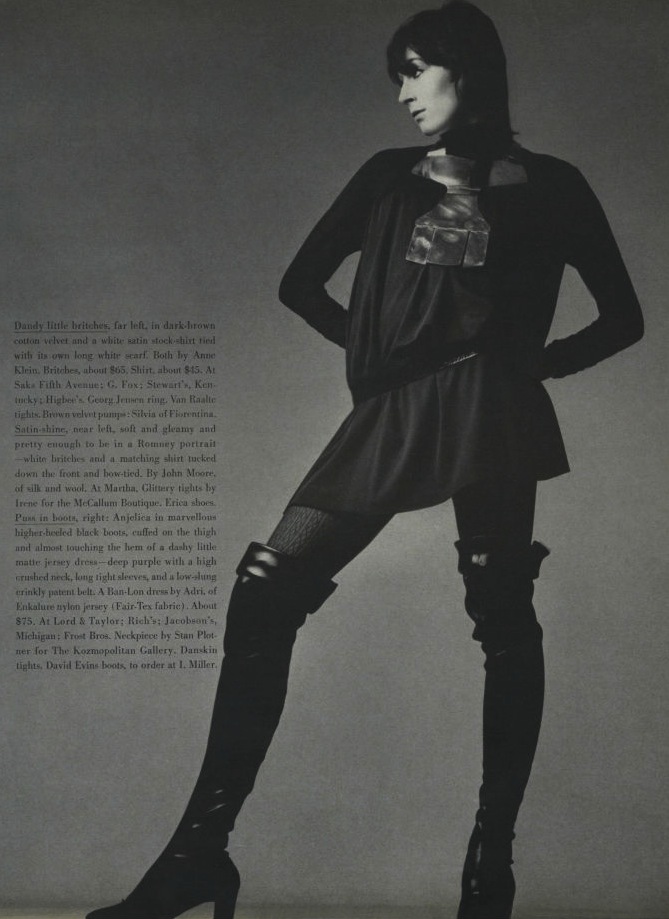
When I was wading through back issues of Vogue researching this project, I kept coming across the name David Evins associated with some truly spectacular pairs of late sixties thigh-length boots. And other boots, for that matter. Other designers of the period, like Roger Vivier or Beth Levine, were already familiar to me. But who was David Evins?

snapshot58

Evins was born in London in 1909. In 1922, his parents emigrated to the United States from England.  As a young man, he studied illustration at Brooklyn’s Pratt Institute and went on to work as an artist at Vogue. While there, he made the fateful decision to alter the style of some shoes he was drawing for effect. It got him fired; as a parting shot, his editor suggested if he liked messing around with shoe design, maybe he should do that for a living instead.

1967-001

Evins took him at his word. After working as a pattern maker and designing for a number of manufacturers, he opened a factory in New York City in 1947 with his brother. In 1948 he won the Coty Award for his creation of the shell pump, a shoe with a low-cut top that showed more of a woman’s foot. His design ethos was aimed at making shoes for women that were lighter and more comfortable.

snapshot11a

David Evins shoes did not come cheap. The handmade shoe called “6 ounces” sold for up to $175 at a time when quality women’s shoes cost about $45 a pair. But he attracted a very exalted clientele. He designed the “chunky pump” worn by Judy Garland, Marilyn Monroe’s “subway sandals” and the shoes worn by Ava Gardner in the film “The Barefoot Contessa.” He made shoes for every First Lady from Mamie Eisenhower to Nancy Reagan. He prided himself in the simplicity of his designs – “it’s not what you put on but what you take off,” he said, in a 1987 interview.

snapshot51

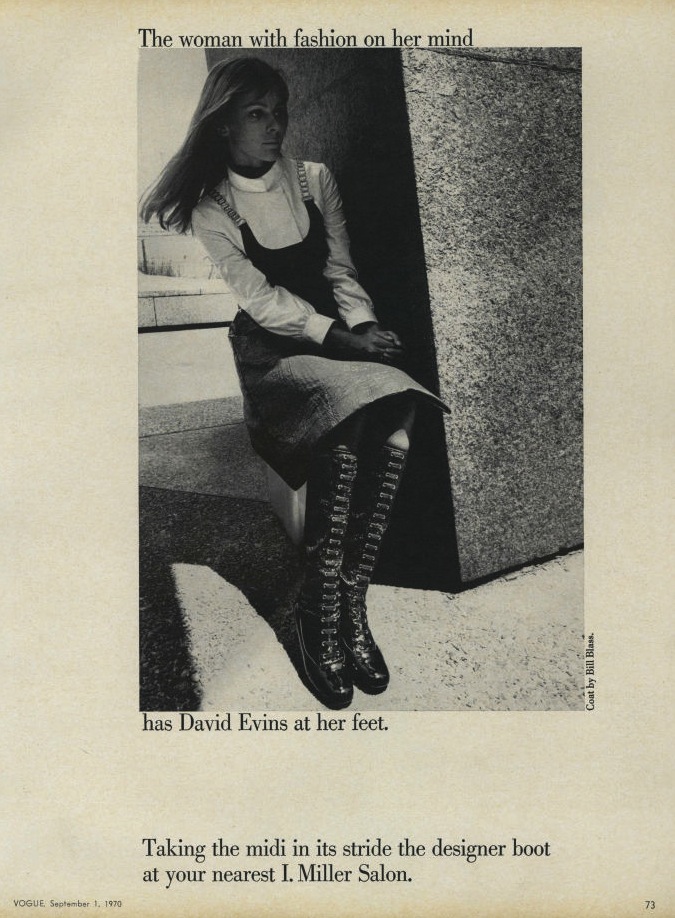
“Yeah, but what about the boots?” I hear you ask. Truthfully David Evins was better known for his shoes – not for nothing was he nicknamed “the King of Pumps.” To get a sense of his boots, you need to trawl through the pages of magazines like Vogue, where his footwear for the shoe salon I. Miller features heavily in the reports on the New York collections, especially over the years 1967-1971.

snapshot

The first impression is that Evins’ reputation for clarity of design was well deserved. His boots are clean, simple, and devoid of excess ornamentation. They accentuate the lines of the clothing that they accessorize. They are both striking, and elegant.

71.192.55a-b_CP2

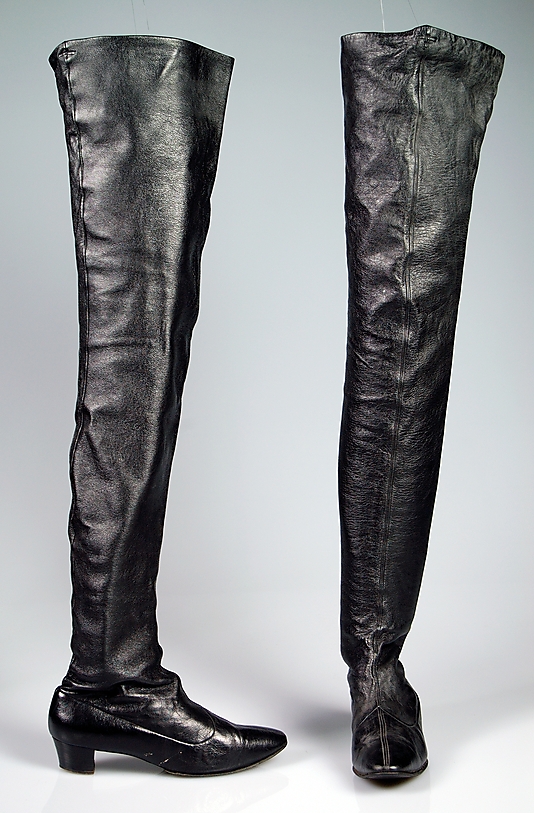
This is particularly true for the ultra-tall, thigh-length boots that formed the core of his work during this period. A couple of examples from the Brooklyn Museum Costume Collection at the Met are featured here. If you look at the brown vinyl pair above, you’ll see a couple of small loops at the top of the shaft. These were designed to connect to a suspender belt, the only way these boots could be held up. They were a demanding style to wear.

snapshot68

And in truth, Evins’ thighboots could probably only be carried off by one in a hundred women, those blessed with the mile-long legs of a fashion model and the bank balance of a millionaire’s wife. But Evins also designed shoes and boots for “ordinary” people as well. His knee-length boots were both stylish and eminently practical.

snapshot78

While they fit into the general category of late 60s knee-boots that we discussed in an earlier post, Evins’ knee boots foreshadowed by five or so years the styles that were to emerge in the mid-70s – the so-called “Cossack boots.” Rather than tightly hugging the calf as most contemporary boots did, Evins’ boots had a relatively loose-fitting shaft that crumpled into a extravagant stack of compression folds around the ankle.

snapshot129

My sense from working my way through back issues of Vogue is that as the seventies progressed, David Evins designs appeared less frequently. But he went on producing outstanding shoes that were a model of simplicity and taste. He died in 1991, at the age of 85.

References:

Image Sources:

  • Boots by David Evins, 1966. Brooklyn Museum Costume Collection at The Metropolitan Museum of Art, Gift of the Brooklyn Museum, 2009; Gift of Mrs. Stanley Mortimer, 1971. Accession #2009.300.5807a, b
  • Angelica Huston in boots by David Evins: Vogue, September 1969
  • Boots by David Evins: Vogue, September 1967
  • Loose hemmed coat and belted shirt dress worn with contrasting thigh-length boot styles by David Evins: Vogue, 1968
  • Advertisement for David Evins at I. Miller Salon, Vogue 1971
  • Silver-studded over-the-knee boots by David Evins, Vogue 1971
  • Boots by David Evins, ca 1968. Brooklyn Museum Costume Collection at The Metropolitan Museum of Art, Gift of the Brooklyn Museum, 2009; Gift of Mrs. Stanley Mortimer, 1971. Accession # 2009.300.5808a, b
  • Red leather knee-length boots by David Evins for Oscar de la Renta, Vogue 1970
  • Red leather knee-length boots by David Evins, Vogue 1970
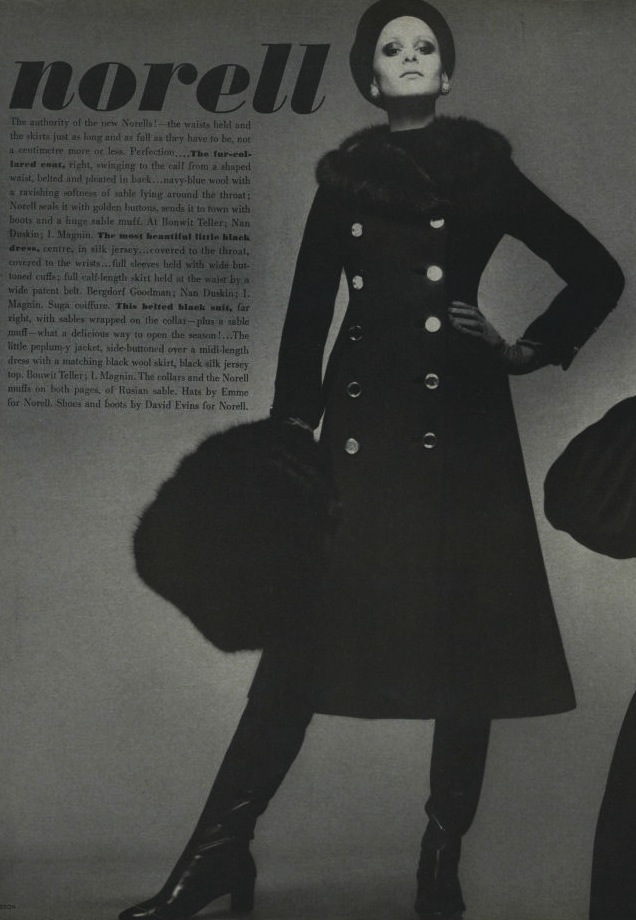
  • Black leather boots by David Evins for Norell, Vogue 1970

Additional Boots (follow links for images):

  • Metallic stocking boots by David Evins, 1967. Brooklyn Museum Costume Collection at The Metropolitan Museum of Art, Gift of the Brooklyn Museum, 2009; Gift of Mr. David Evins, 1968. Accession # C.I.68.39.3a, b
  • Suede knee boots by David Evins, 1969. Brooklyn Museum Costume Collection at The Metropolitan Museum of Art, Gift of the Brooklyn Museum, 2009; Gift of Mrs. Stanley Mortimer, 1970. Accession # 2009.300.5770a, b

Britpop and the Boot

img045a

If there’s one thing that I enjoy writing about as much as the history of the fashion boot, it’s the history of popular music. Of course, there is a long and complex association between the two (which will form the basis of a later and more detailed posting). But for now, I want to consider just one aspect of this, which is the resurgence of the boot in the early/mid 1990s and what relationship – if any – exists between this and the rebirth of classic rock music that in the UK became known as “Britpop.”

article-1317058-0B71595E000005DC-9_468x656

If you approach rock from a purely American perspective, then the early nineties was all about Grunge – Nirvana, Pearl Jam, Alice in Chains, Soundgarden et al. It wasn’t exactly what you’d call “fun” music, unless your idea of fun was sitting in your parents’ basement with the lights out cutting yourself.

153280

Meanwhile, in the UK, rock was following a different trajectory. Sometime around the mid-80s, people began to rediscover 60s soul music. From there, it went via neo-psychedelic “Baggy” rock in the so-called “Second Summer of Love” (1988), cross-fertilizing with the dance music of Acid House, and eventually re-emerging in the mid-90s as an exuberant brand of retro-flavored, guitar-based rock that was known as Brit Pop.

img037

The early 90s was when club culture really exploded in Britain. It had happened before, in the late 70s and early 80s – a very diverse fusion of music and fashion. In its early 90s guise, the look was predominantly sixties and early 70s – platforms, miniskirts, bright colors, fake fur – combined with a healthy shot of fetishism – latex, pvc, piercings. And boots. Lots of boots.

582640493_o

So if boots hadn’t quite hit the mainstream again in big way, they were certainly on the cutting edge of fashion. If you thumb through the pages of style magazines from this period, like SKY, Arena, or The Face, you’ll find not just fashion editorials, but ads, features on clubs, and a host of other material featuring women in a wide variety of boots.

spice-girls-reform-press2

Variety was the key feature – there were lace-up boots, zip-fastened boots, pull-on boots, platform boots, high-heeled boots, low-heeled boots, ankle boots, knee boots, and thigh-high boots. They came in every possible variation of material and color. There was no general rule to it. It was whatever the wearer happened to think was cool.

Fluffy

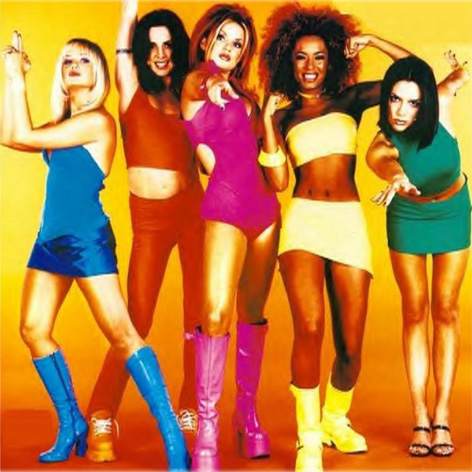
Ultimately, it was the rich foundation established in the clubs that was drawn on by the major designers and fashion journals to revitalize the fashion boot in the middle part of the decade. The look retained its hold in popular music, as girl bands like Eternal, the Spice Girls, and the cruelly underrated Fluffy, took boots onto the stage and Top of the Pops. But that’s another story.

Image Sources:

  • Time Out, July 12-19, 1995: own scan
  • Patsy Kensit & Liam Gallagher: Vanity Fair, March 1997 via http://www.dailymail.co.uk
  • Lena Fiagbe, Gotta Get It Right, 1993: music stack.com
  • Outfit for clubbing, Company 1997[?): own scan
  • Berri, Shine Like a Star, 1995: cdandlp.com
  • Spice Girls, ca 1995: poulet-poulet.blogspot.com
  • Fluffy, ca 1996: alwaysontherun.net